Field Notes
The Travel Industry Finally Noticed the Farm
It happened the way a word slips into common use — no ceremony, no one marking the date on a calendar anywhere…
Field Notes Editorial
It happened the way a word slips into common use — no ceremony, no one marking the date on a calendar anywhere — until "a farm you can visit," which for years had been nothing more than a friendly rumor passed between travelers, thickened into "agritourism," and agritourism, just as quietly, hardened into something else entirely: a line item, a category several unrelated market-research firms now draw salaries forecasting. That hardening is the actual story here, more than any single number inside it. Nobody builds a ten-year growth model, complete with charts and a confident cover page, for something a few hundred people are doing shyly on their holidays. Models like that get built once the money is already in motion, headlong and unmistakable, and everyone with a stake in it wants a number to hold up to the light.
So: how much money, exactly? This is where the story stops being tidy and starts being honest, and honesty here comes with real digits attached, because none of what follows is invented — it can't be, not in this business. Fortune Business Insights places the global agritourism market at USD 9.18 billion in 2025, rising to USD 28.38 billion by 2034, a climb they clock at 13.36% a year, and they single out Asia Pacific, by name, as the fastest-growing region on their entire board. IMARC Group, surveying what is nominally the same industry in the same year, arrives instead at USD 81.2 billion in 2025, swelling to USD 209.3 billion by 2034 — a different order of magnitude before either firm has finished its first paragraph. And Future Market Insights, in its own press materials, has floated a figure closer to USD 494 to 536 billion, the exact number sliding depending on which release lands in your inbox and whether the target year printed on it says 2034 or 2036.
Sit with that for a moment, because it deserves more than a glance. Three respected firms, one industry, the same stretch of the same decade — and the floor and the ceiling of their estimates sit roughly nineteen times apart. Nineteen. That is not a rounding error accumulating quietly in a footnote; that is three entirely different definitions of the word "agritourism" wearing the same trench coat and hoping no one checks underneath. Somewhere in one spreadsheet, a Tuscan cooking class and a Nebraska corn maze are filed as the identical line of business as a weekend spent milking goats in the hills above Ubud. Somewhere in another, the category has been drawn so generously that anything with the word "rural" standing anywhere near it gets swept in. No one, as far as we can tell, is lying. Everyone is measuring a different animal and calling it by the same name, and doing so with a straight face.
We are not going to pretend to referee which of the three has it right — that would be its own kind of dishonesty, dressed up as authority. What we will say, and say plainly, is that the disagreement itself is the finding. Three research firms willing to contradict each other this loudly, this publicly, over the size of a thing, is a far stronger signal that the thing is real than any single reassuringly round number could ever be. Nobody stages a fight this heated over the market size of artisanal pencil sharpeners. You only get shouting matches like this over something actually growing underfoot.
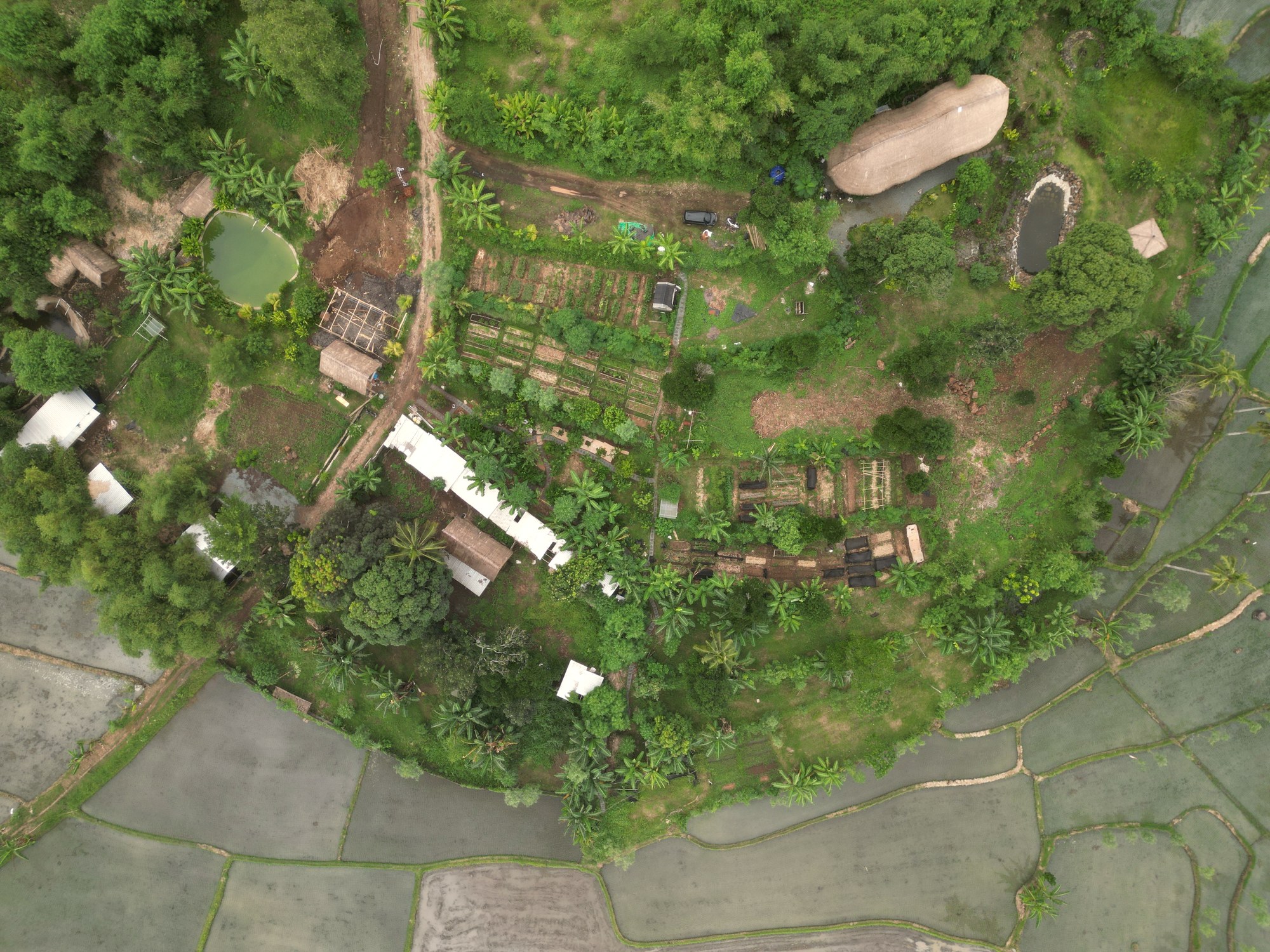
And this region, notably, is not waiting around for the analysts to reconcile their spreadsheets. While Fortune Business Insights and IMARC talk past one another in dueling press releases, a farm-cooking listing outside Chiang Mai has gone on, unbothered, collecting the kind of review count and near-perfect average a small restaurant would laminate and hang by the door. A farm cooking school in Ubud carries hundreds of reviews at nearly five stars, ranked among the top food-and-drink experiences in a town that is not exactly short on them. And a farm outside Ho Chi Minh City, newer to the listings, is already holding a rating just as high. None of these are projections drawn on a whiteboard. Nobody forecasted a single one of these numbers into being; people simply kept arriving, spent a morning cooking alongside someone whose own family grows what ends up on the plate, and typed five stars into a phone somewhere on the ride back to the hotel, half-distracted, meaning every word of it.
And what's worth lingering on, actually reading these reviews line by line, is what guests reach for when they try to describe what happened to them. Not a certification. Not a market-size projection, needless to say. A guest in Chiang Mai reaches, with the kind of plainness that only comes from meaning it, for the chickens and the gardens — the actual dirt-and-feather farm in front of her, not a claim laminated somewhere behind a counter. A guest near Ho Chi Minh City describes, unprompted, being told how the ingredients in front of her had traditionally been used — medicinally, as well as at the table — a story simply handed to her, not one she'd had to ask for or dig out. Nobody writing these reviews sounds like an analyst reaching for a decimal point. They sound like people who spent an unhurried morning somewhere real, and now want the rest of the internet to know it existed.
That, finally, is the gap this whole conversation keeps stepping neatly around. The travel industry has, by three wildly disagreeing accounting methods, finally noticed the farm. But what none of the three reports can tell you — what no market-size report, however lavishly funded, will ever be built to tell you — is which farm, specifically, deserves your one free morning in Chiang Mai, and which one is a well-lit shed with a coffee machine bolted to the counter and a photographer on retainer. That is a findability problem, not a forecasting problem, and it resolves into a different kind of number altogether — not billions, not even millions, just one farm, verified, standing in the actual town where you happen to be standing too.
The industry noticed. Good, and about time. What comes next is the smaller, quieter, far less fundable job none of those three glossy reports was ever built to do: telling the two apart, one town, one farm, one morning at a time.
The findable ones — gathering now.
The whole point of this piece is the farm you can actually stand in front of. We're verifying them across the region as they come in; the ones that pass will be listed right here, town by town.
Run a farm worth the morning? Confirm your listing and answer one short call.
Answer the call →